A self-hosted CRM and client-workflow suite for a single business, built on React and Supabase. One owner runs it; clients get a secure portal. It is extracted from a CRM that has run a real client practice in production, and it is MIT licensed.
What it does
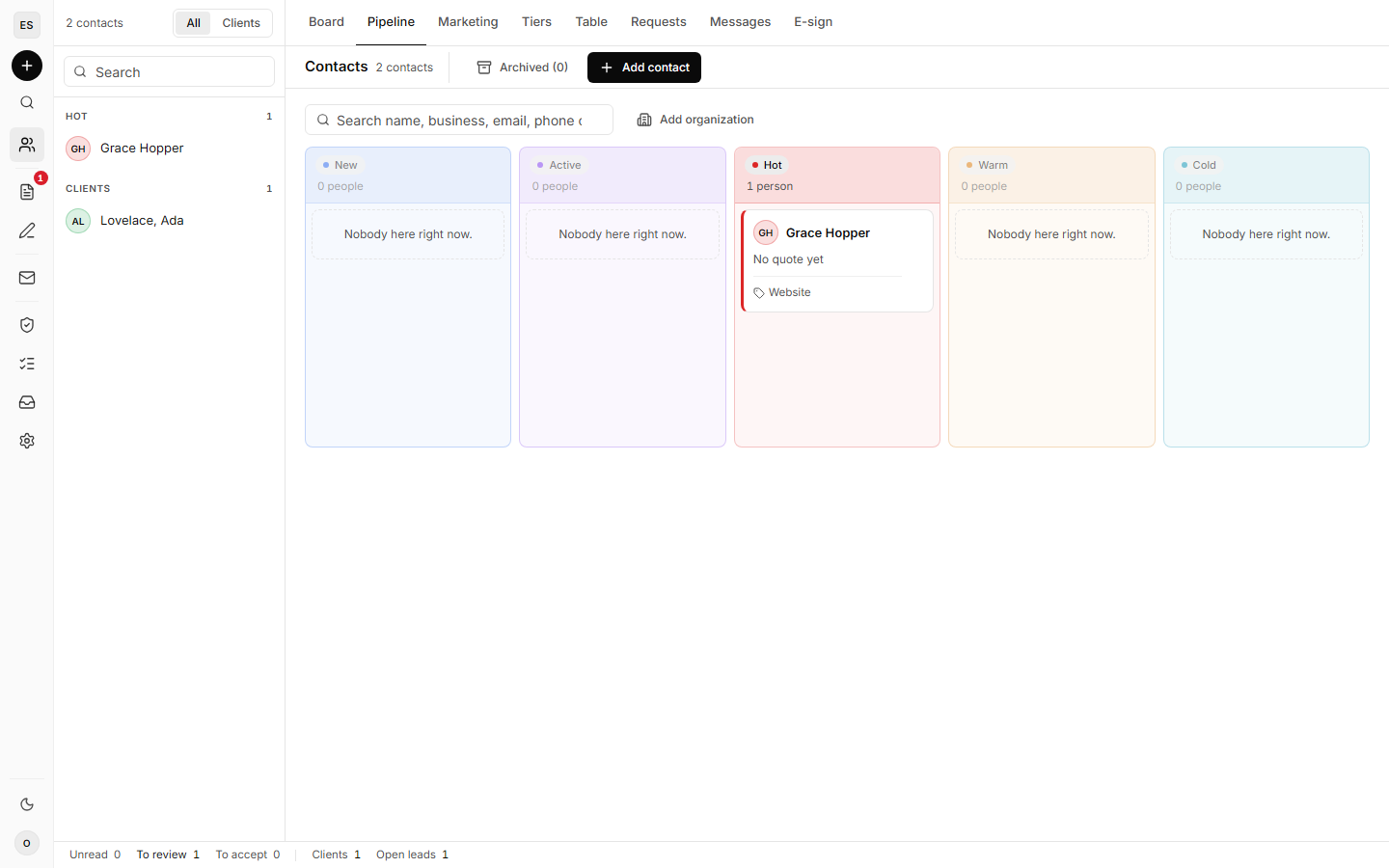
- Contacts and pipeline: contacts, businesses they own, notes, service quotes and upsells, client tiers and reversible archiving.
- Client portal: invitations, a client home, profile.
- Documents: upload, preview, annotate and share, encrypted at rest.
- Secure messages: a client’s message is end-to-end encrypted in their browser to the owner’s key; the owner’s replies are stored as plain text. Messages are deleted 7 days after they are read.
- Requests: send a client a list of documents and questions, with reminders; a request closes itself once every answer is accepted.
- E-signature: place fields, send, sign, and verify an executed PDF against tampering.
- Work board: a Kanban board of work items with configurable stages.
- Group email: email a chosen group of contacts, with an unsubscribe link in every message.
- Marketing: leads and won clients by month and by source, revenue goals and ad spend.
- Lead intake: a keyed endpoint another system posts new leads to.
- MCP connector: an OAuth-protected MCP server so an AI assistant can work the CRM.
- Control center: names, branding, lead sources, services and other pick-lists are data the owner edits, not code.
| The work board | A contact record |
|---|---|
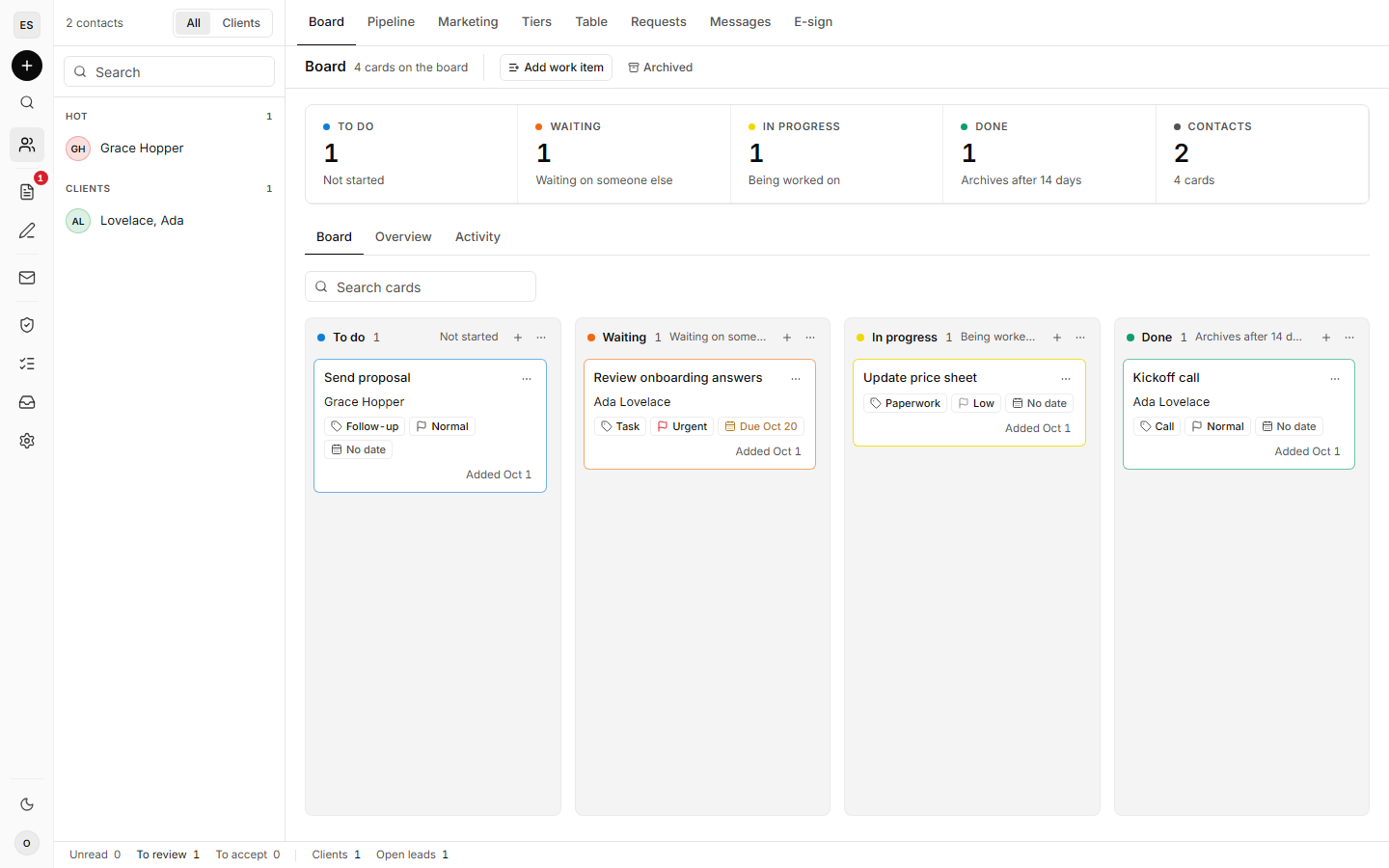 |
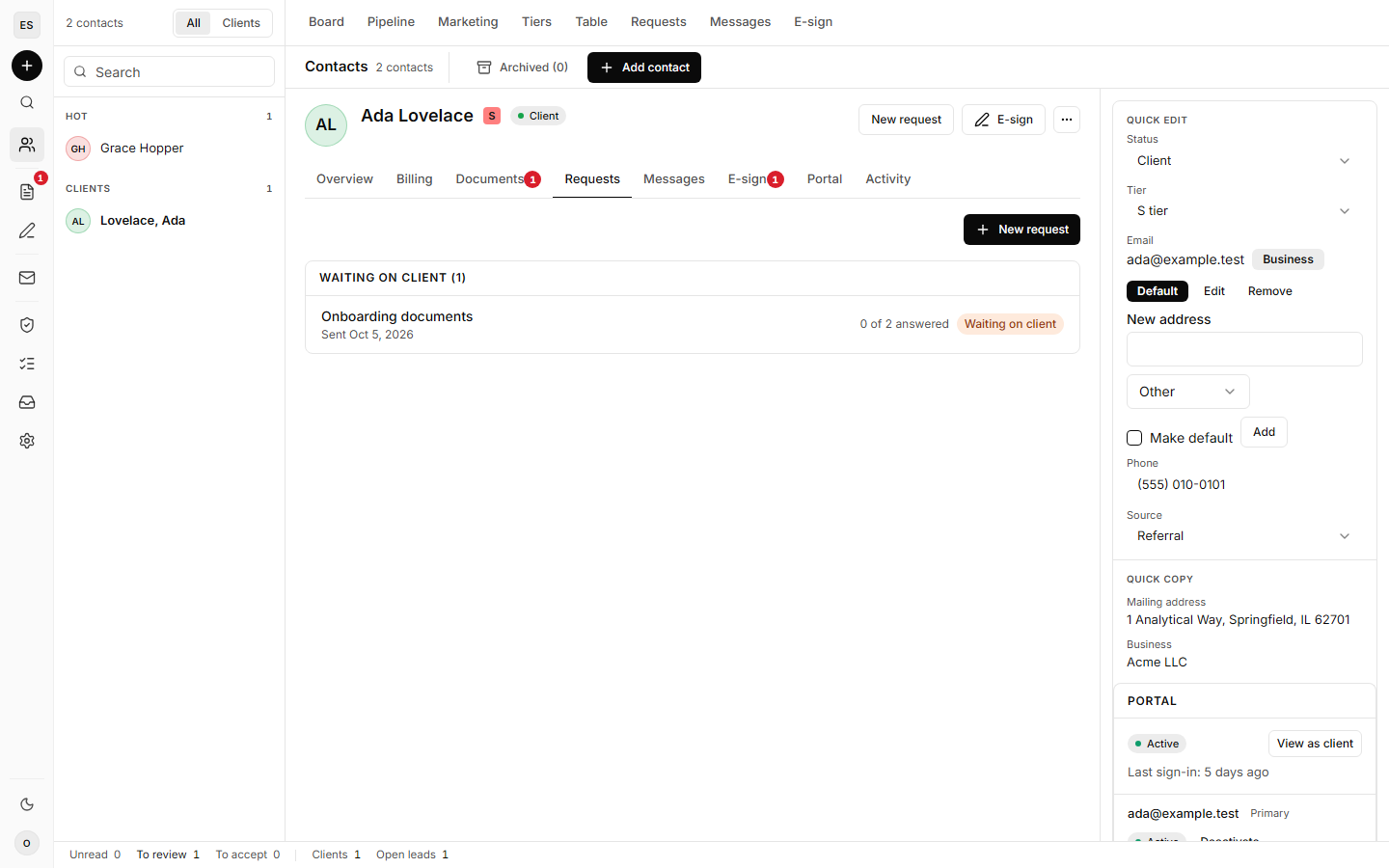 |
| The client portal | The e-signature composer |
|---|---|
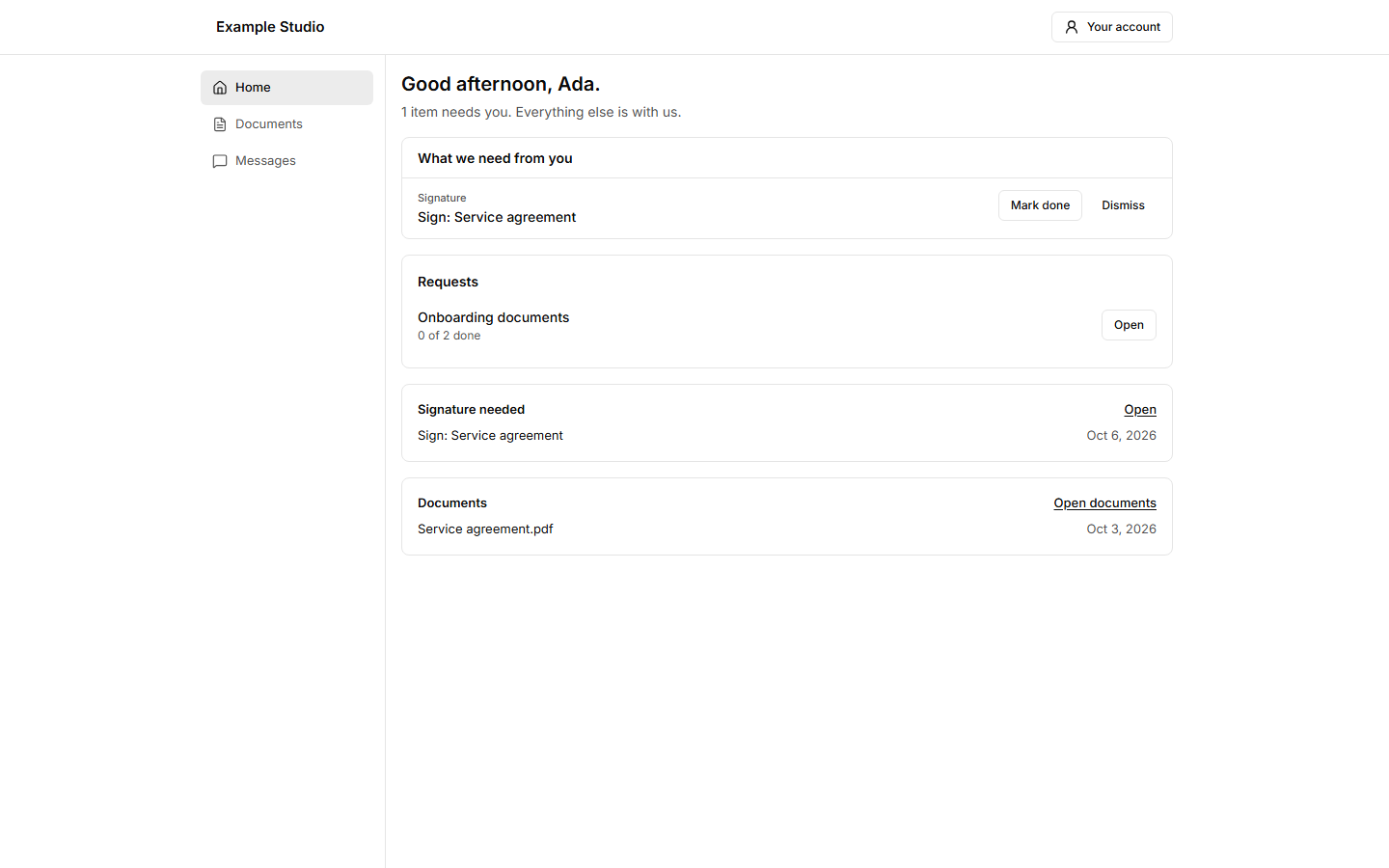 |
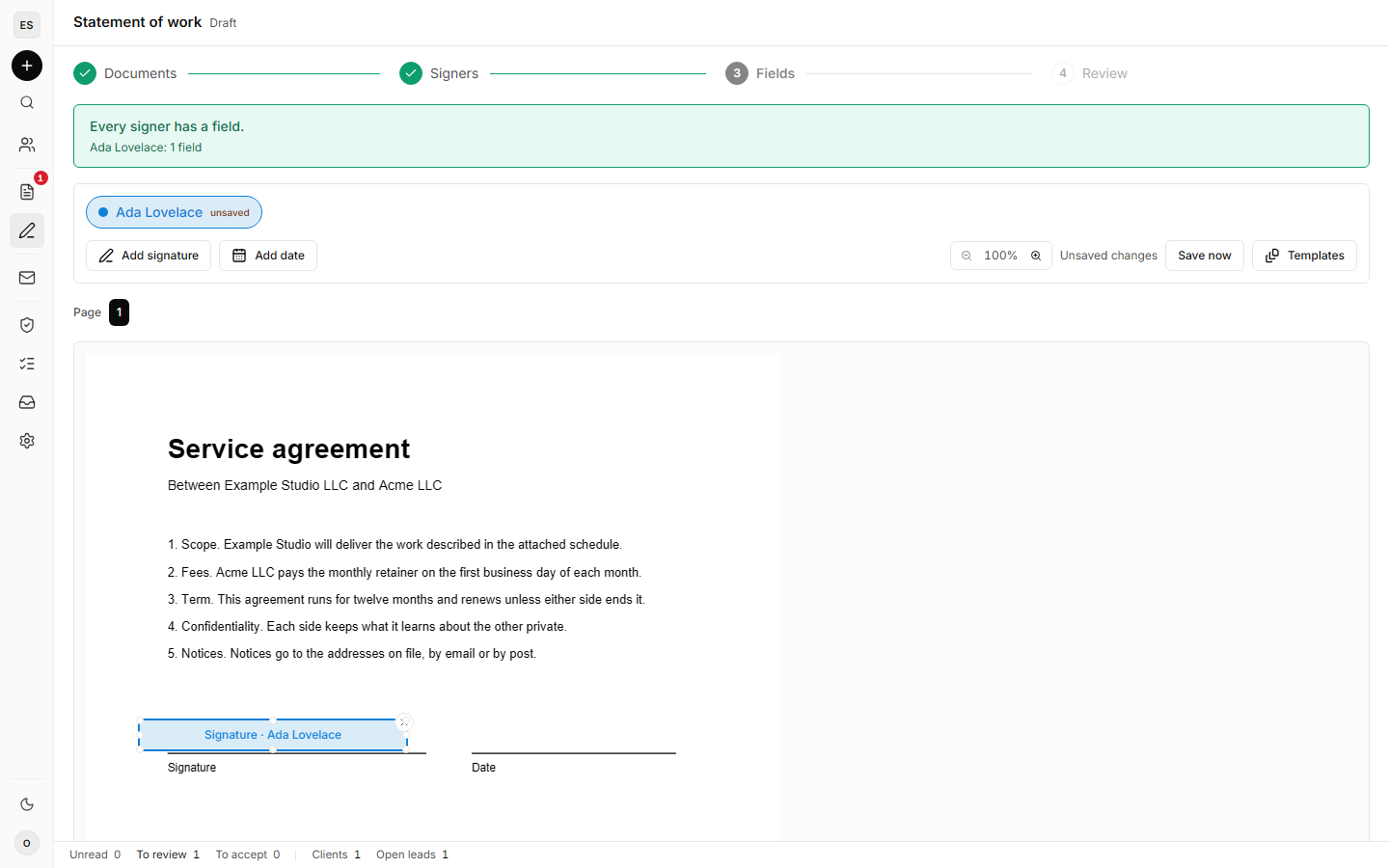 |
Documentation
- Setup: from a fresh clone to a running install, step by step.
- Configuration: every environment variable and function secret, required or optional, and what stops working without it.
- Features: what the owner and clients can do, domain by domain.
- Architecture: the feature registry, the edge layer, the job runner, the outbound adapter and the migrations.
- Contributing and Security (how to report a vulnerability).
Running it
You need Node 22 and a Supabase project; the free plan is enough, and nothing runs in Docker. From a fresh clone of the repository:
npm ci
npx supabase login
npx supabase link --project-ref <your-project-ref>
npx supabase db push
npx supabase config push
npm run dev:bootstrap
npx supabase secrets set --env-file supabase/functions/.env
npx supabase functions deploy --use-api
npm run schedules:install
npm run dev
Setup walks through each step and what the bootstrap does.
Security model
- Row-level security on every table, with explicit grants rather than inherited defaults.
- The owner is resolved from a single identity row plus an MFA session check. A role claim in a token grants nothing on its own.
- A client is a portal account bound to one contact and reads its own record through narrow functions.
- Rate limits fail closed. The audit log cannot be updated, deleted or truncated. The anonymous role can reach no table at all.
Author
Built and maintained by Timothy LeGendre, CPA, of Timothy LeGendre CPA LLC.